About Course
Free RAG Course for Beginners: Learn Retrieval Augmented Generation, LLMs and AI Knowledge Bases
This free RAG course from NORAI Academy has been rewritten throughout, with fresh explanations, practical examples and expanded quizzes. The updated content explains how modern RAG applications work, where they add value and what their limitations mean in practice.
How can an AI assistant answer questions about a company’s internal documents, a recently updated policy or information it never encountered during training? Retrieval Augmented Generation, or RAG, connects a generative AI model to external information sources so it can retrieve relevant material before producing an answer.
Those sources might include documents, PDFs, websites, manuals, databases or company knowledge bases. Instead of relying solely on its training knowledge, the model receives selected evidence as context for its response. This can make answers more relevant and easier to verify, provided the application retrieves suitable information and uses it correctly.
What is RAG? explains these ideas in plain English. You do not need coding experience, specialist software or a technical background to begin. This is a conceptual introduction, not a programming or deployment tutorial.
Completely rebuilt and updated in October 2026.
What you will learn
- What RAG is and how it connects large language models, or LLMs, to external information.
- How retrieval, augmentation and generation work together in a typical RAG interaction.
- Why supplying information as context is different from retraining or fine tuning a model.
- How RAG can support access to current and specialist knowledge, without automatically guaranteeing live information.
- How retrieved evidence can reduce unsupported answers, and why hallucinations can still occur.
- The roles of the knowledge base, retriever, integration layer and generator.
- What document chunking and embeddings do, and how keyword, vector and hybrid search differ.
- Why source quality, document versions, access permissions and accurate interpretation matter.
- How to assess citations, recognise missing evidence and understand the limits of a generated answer.
Explore practical RAG use cases
The course examines specialised chatbots, virtual assistants, research tools, content generation, market analysis, product development, internal knowledge engines and recommendation services.
Concrete examples show how these applications use retrieved information, what can go wrong and where additional software or human judgement is needed. You will learn to distinguish finding information from taking action, a relevant passage from complete evidence, and a convincing explanation from a supported claim.
Who is this course for?
This course is suitable for:
- Beginners who want to understand RAG without unnecessary technical jargon.
- Students exploring large language models and AI applications.
- Professionals interested in AI knowledge bases, private chatbots and organisational knowledge.
- Entrepreneurs and business owners evaluating practical uses of AI.
- Consultants, marketers and creators seeking a clearer understanding of reliable AI workflows.
- Developers and technical learners who want a conceptual foundation before moving into implementation.
Build understanding, not just familiarity with the terminology
By the end, you will be able to explain how a RAG application finds information, prepares context and generates a response. You will also understand why adding documents does not automatically guarantee accuracy, privacy, lower costs or better recommendations.
The aim is to help you recognise where RAG is useful, ask better questions about AI systems and judge their outputs more confidently.
Each of the four sections concludes with a scored quiz to reinforce understanding. A minimum score of 80% is required to pass each quiz.
Frequently asked questions
What is RAG in AI?
RAG stands for Retrieval Augmented Generation. It combines information retrieval with generative AI, supplying relevant material from connected sources as context when a model produces a response.
Is this RAG course up to date?
The course was completely rewritten and updated in October 2026. It includes revised lessons, practical examples and expanded assessments covering retrieval methods, source quality, context, hallucinations and access controls.
Do I need coding skills for this free RAG course?
No. The course explains the concepts in plain English and assumes no programming experience. It focuses on understanding how RAG works rather than teaching you to build or deploy a system.
Can RAG prevent AI hallucinations?
RAG can reduce unsupported answers by supplying relevant evidence, but it does not eliminate hallucinations. A model can still misinterpret a source, overlook a condition or invent details that the retrieved material does not support.
What is a RAG knowledge base?
A RAG knowledge base is the collection of information available for retrieval, together with any supporting search indexes. It can include documents, database records and other authorised sources, rather than one single repository.
What is chunking in RAG?
Chunking divides content into smaller passages that can be searched and retrieved individually. Useful chunks preserve meaning and important conditions while helping the application select focused evidence for a question.
Does every RAG system need embeddings or a vector database?
No. Embeddings support vector search, but retrieval can also use keyword search, database queries or combinations of methods. The course explains these alternatives and why their suitability depends on the application.
Course Content
What Are the Benefits of RAG?
-
The Primary Benefits of RAG
-
Cost-effective AI Implementation and Scalable Deployment
-
Access to Current and Domain-Specific Data
-
Lower Risk of AI Hallucinations
-
Increased User Trust
-
Expanded Use Cases
-
Enhanced Developer Control and Model Maintenance
-
Greater Control over Data Access
-
The Benefits of RAG
RAG Use Cases
How Does RAG Work?
Components of a RAG System
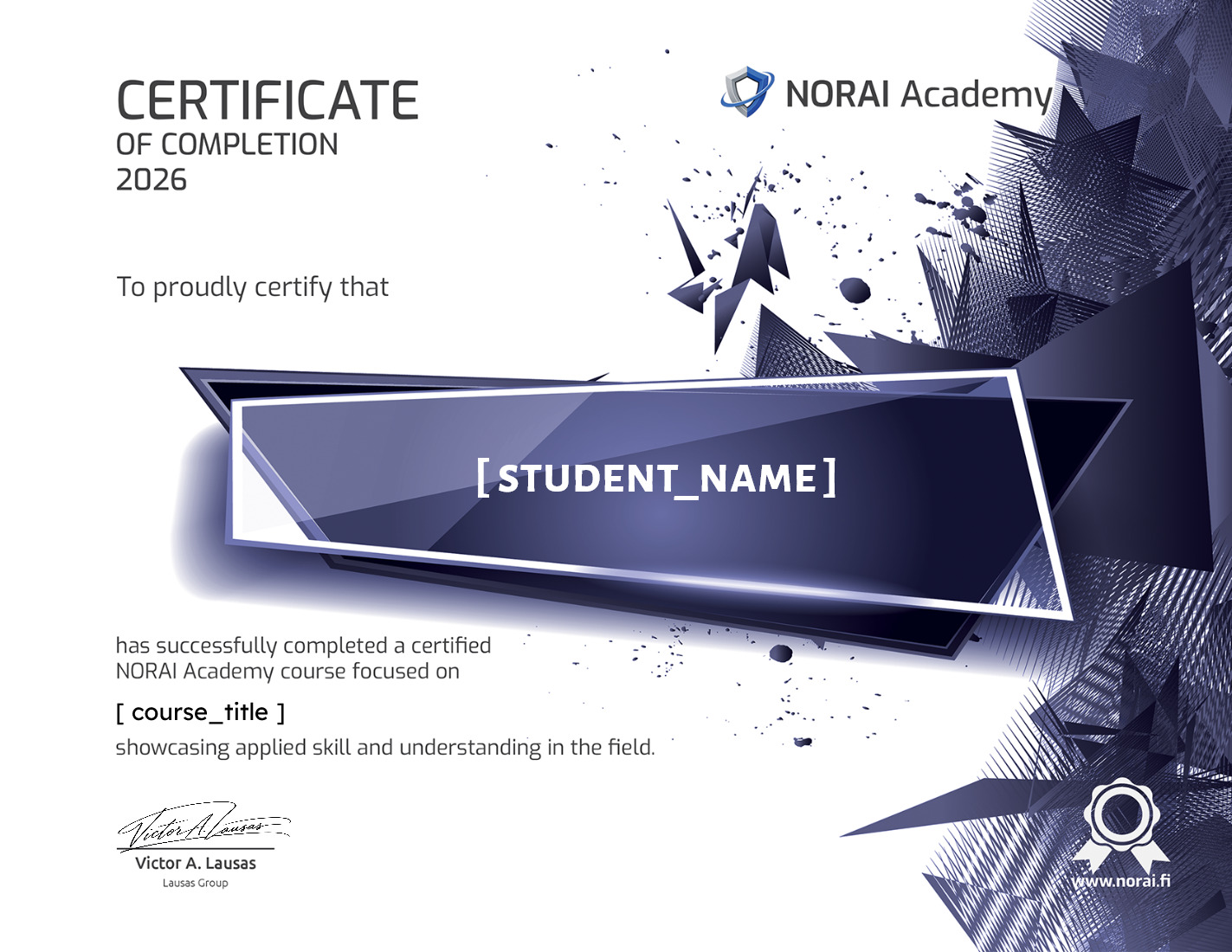
Earn a FREE certificate on completion!
Add this certificate to your resume to demonstrate your skills & increase your chances of getting noticed.
Student Ratings & Reviews
The content is well-organized and provides a solid high-level overview. However, it stays on the surface of the topic and misses the deep architectural insights you might need for real-world projects.
Perfect as a foundational entry-level course, but don't expect an advanced deep dive

Marcos Roberto Corrêa
Borda da Mata - MG -Brasil